Pine needle tea has very high levels of vitamin C and A. It can have more vitamin C than 6 lemons. First you need to pick the newest green pine needles you can find, they are normally located at the end of the branch and are lighter green than the rest. You should use about a 1/2 cup of needles to about 1.5 pints of water. You can either chop them up or just put them into the cup whole. It is recommend that you bring your water to a boil first then add the needles. Boil for about 20 minutes and then allow it to cool for another 20 minutes or so. The tea should be a reddish color with a mild pine taste and smell. Remember boiling the needles too long will cause the vitamin C content to diminish. The longer you allow the tea to sit after boiling the stronger the tea will be. Stir and Enjoy!
WARNING!!! Do not consume pine needle tea if you are pregnant or even think you might be pregnant.
Monday, March 21, 2011
Friday, March 18, 2011
Bow Drill
WOW!!! I tried starting a fire with a bow drill yesterday with the intention of posting a "how-to video". I was just using some wood that I have around the house, but upon further review the wood you use makes all the difference. It looks so easy but after a few hours of trying and sweating my butt off I came back inside and did some more research. The best wood to use for a bow drill is Cedar, Willow, Fir, Poplar, and Spruce and I didn't have any of those types of wood handy. I need to reassess my situation and find some different wood and try again. There are 5 different parts to the bow drill: Base board, Spindle, Bow, Spindle, and Hand block. I will keep trying to improve on my design and try some different types of wood. I will upload a video shortly.
Wednesday, March 16, 2011
Fire Starting Made Easy
Check out the quick video to the left about how adding a little vaseline to your tinder can help you start a fire faster and easier. I always carry cotton balls and lint with me to help start fires but from now on I am going to throw in some vaseline as well. Not only good for fires, vaseline is also good for protecting chapped skin, blisters, or any other cuts or scrapes you might get while on your outdoor adventures.
Tuesday, March 15, 2011
Humphreys Peak
Here are some pictures from camping last fall with my friends Kyle, Keith, and Jarid near Flagstaff and also climbing Humphreys Peak. Humphreys Peak is the highest mountain in Arizona at 12,637 feet. I had a nice case of altitude sickness, I won't bore you with the details but you can look up the symptoms if you want (not real pretty).
Thursday, March 10, 2011
Mesa Grande Ruins
My sister brought this to my attention and I thought it was worth sharing. Plus there is a free pancake breakfast!!!
The 2011 Open House of the Mesa Grande Ruins Interpretive Trail will be held Saturday, March 19 from 8 a.m. to 11 a.m. The free event is the only day of the year this archaeological treasure is open to the public.
This self-guided tour of the ancient home of the Hohokam will give you the chance to tour this large prehistoric Hohokam temple mound, view prehistoric technology demonstrations and participate in ancient games at the archaeological site at the northwest corner of West 10th Street and Date/Brown. Experts will be stationed throughout the site to answer questions. A free pancake breakfast, sponsored by the Mesa Grande Community Alliance, will be served from 8 a.m. to 9:30 a.m.
“Mesa Grande is a unique treasure for the City and the open house is a wonderful opportunity to learn more about what the Hohokam built and our efforts to preserve it,” Arizona Museum of Natural History Curator of Anthropology Dr. Jerry Howard said. The City of Mesa purchased the Mesa Grande ruins to preserve this cultural treasure with the goal of opening it to the public as an educational and recreational facility. Mesa Grande is listed on the National Register of Historic Places. It is also an official Arizona Centennial Legacy Project. The City is building a new welcome center at Mesa Grande and the goal is to open it before the state centennial next February.
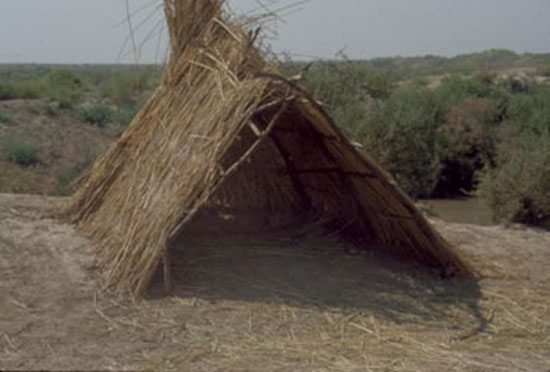
Lean-to Shelter
Monday, March 7, 2011
Basic Shelters
In Arizona we have so many different landscapes that when it comes time to talk about shelters we have a multitude of choices. In the winter in northern AZ we can build anything from a snow cave to a lean-to. In the southern part of the state our choices are a little more limited and require us to be very resourceful. I want to look deeper into making a shelter in the desert regions of the state. If you have packed a good survival kit you should have the required materials available to set up a tarp lean-to or cuddle up under your space blanket. But, if you failed to pack appropriately (shame on you) there are plenty of things we can use to build a shelter. Our first concern in building a shelter is to get us out of the hot day time sun and second to keep us warm once the sun sets and the temperature plummets.
The first and most basic shelter is referred to as a cocoon. You simply find as much debris and vegetation as you can find and cover your self with it. The other option is to gather everything you can find make a large pile and slide into it like a snake. Be sure to check for scorpions and big thorns when choosing material for your cocoon.
The second shelter I would recommend is a simple lean-to. I like to use spines from dead saguaro cacti because they tend to be abundant, straight, and easy to break and stack. All you need to do is find a boulder, tree, or overhang and start leaning the sticks against them at a 45 degree angle. Note: the steeper the angle the better it will shed rain and water. After you have a base layer of sticks stacked together you need to cover them with any type of vegetation or solid objects you can find. This second layer is meant to help block the sun, wind, and rain. Remember to make the shelter just big enough to fit yourself and your gear.
Other options you have for building shelters in the desert are tepee style and A-frame style. Both of these are built just like the lean-to but instead of building only one side you have to have a center support and build your shelter on both sides.
Subscribe to:
Posts (Atom)